
 Written by
Mercor AI Startup: Three 23-Year-Old Founders Become Billionaires in $20 Billion Deal
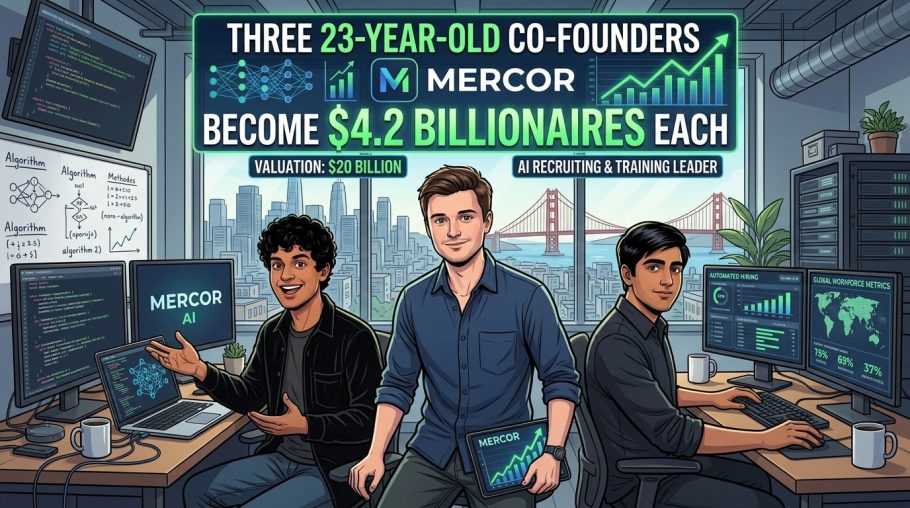
Imagine building a company at just 20 years old and watching it grow into a $20 billion business within three years. The Mercor AI startup is making headlines after its three young founders reportedly reached estimated fortunes of approximately $4.2 billion each, placing them among the world’s youngest self-made billionaires.
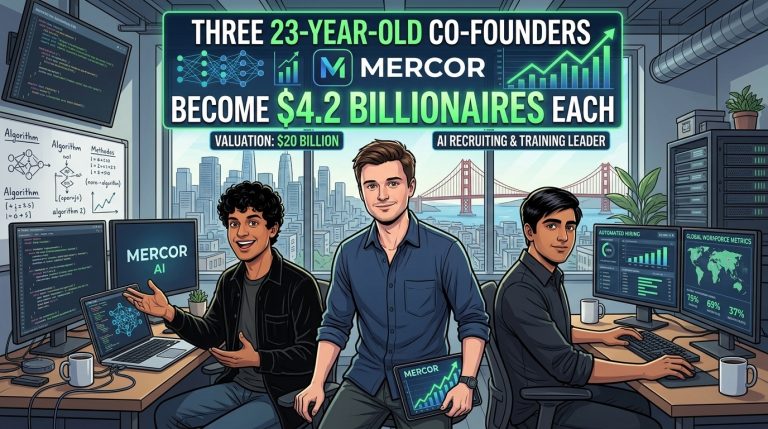
Brendan Foody, Adarsh Hiremath and Surya Midha, all reportedly just 23 years old, turned an ambitious business idea into one of the most talked-about companies in the artificial intelligence industry. Their success highlights how the AI boom is creating extraordinary opportunities for young entrepreneurs willing to build businesses around emerging technologies.
Even more remarkable, their journey did not begin inside a major corporation or with decades of business experience. It started with three young entrepreneurs who met through high-school debate and went on to build a company attracting billions of dollars in investment.
How Three Young Entrepreneurs Built a $20 Billion AI Company
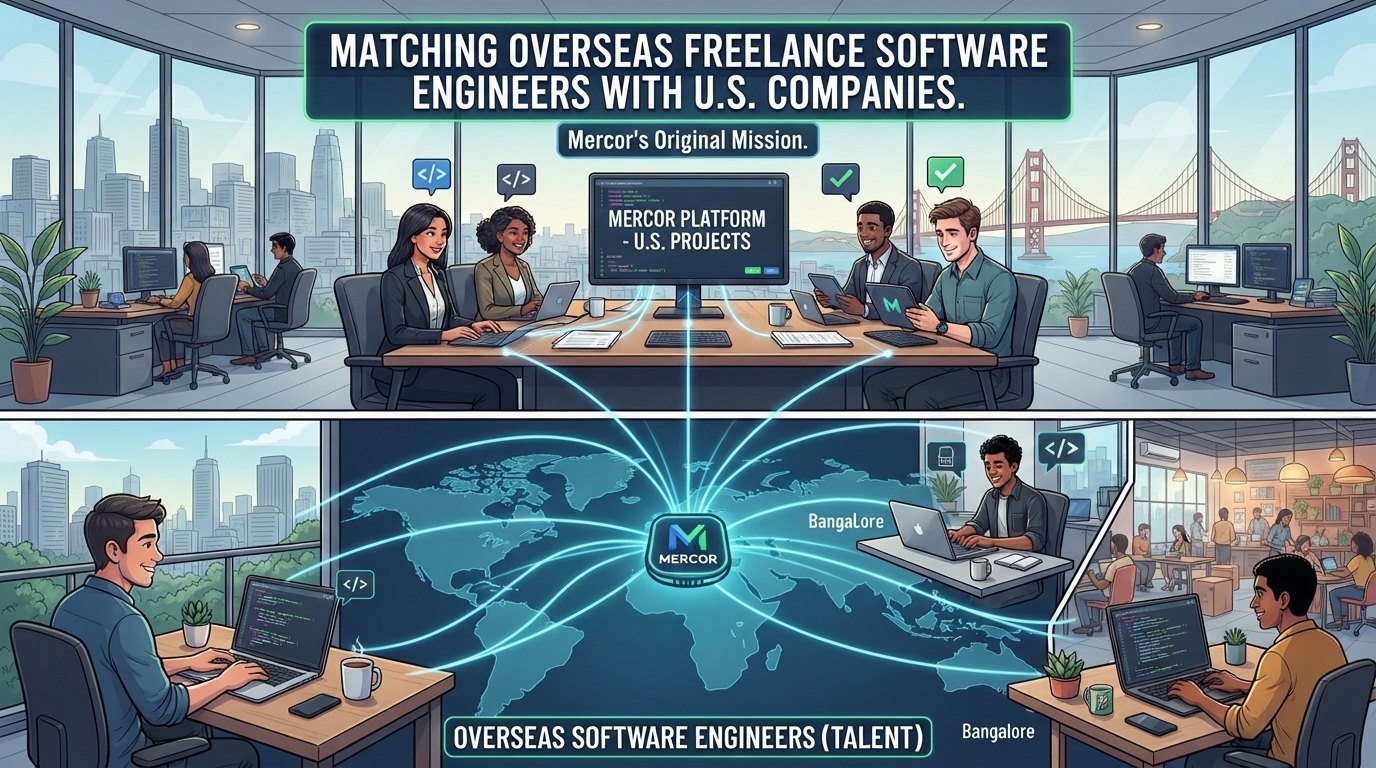
The Mercor AI startup began in 2023, when Brendan Foody, Adarsh Hiremath and Surya Midha launched a business focused on connecting talented professionals with companies looking for specialized skills.
Initially, Mercor concentrated on recruiting and matching professionals with employers. However, the founders recognized a much bigger opportunity as artificial intelligence (AI) started transforming the technology industry.
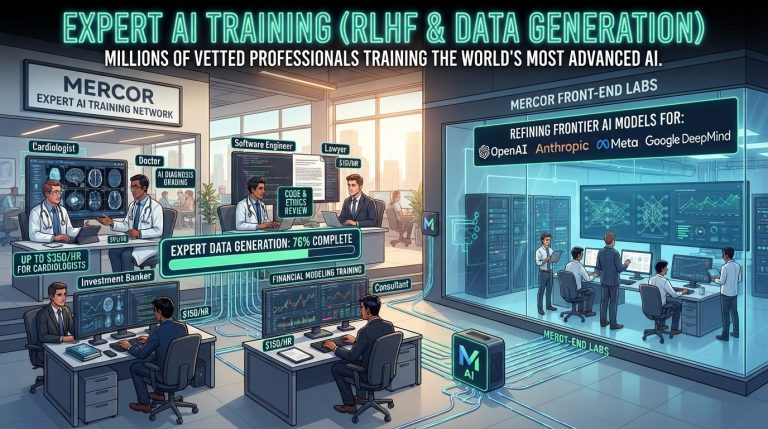
AI companies needed more than powerful computer chips and advanced software. They also needed human expertise, specialized knowledge and high-quality data to train and evaluate their artificial intelligence models.
The Mercor AI startup expanded into this growing market by connecting companies developing AI systems with qualified professionals who could help improve those models.
As demand for advanced AI training increased, Mercor positioned itself within an important part of the artificial intelligence supply chain.
Instead of competing directly with major AI model developers, Mercor built specialized services that support their development.
$750 Million Funding Round Takes Mercor AI Startup to a $20 Billion Valuation
The Mercor AI startup attracted significant investor attention following its latest $750 million funding announcement, marking another major milestone in the company’s rapid growth.
The company reportedly secured $750 million in new investment, bringing its valuation to approximately $20 billion. This represents a dramatic increase from its reported $10 billion valuation in October 2025.
The funding round also attracted attention because of the investors involved, including major names such as Nvidia, Salesforce, Benchmark and General Catalyst.
For investors watching the artificial intelligence industry, Mercor’s latest funding highlights how venture capital continues flowing into businesses supporting AI development, including AI training, professional expertise and specialized data services.
However, a $20 billion valuation does not mean Mercor has $20 billion in cash. It represents the estimated value of the privately held company based on its latest financing transaction. Its valuation and the founders’ estimated fortunes could change as the business grows and future funding rounds take place.
How Much Are the Mercor AI Startup Founders Worth?
According to Forbes estimates, each of the three Mercor AI startup founders holds approximately 21% ownership in the company.
Based on Mercor’s reported $20 billion valuation, that ownership would translate into an estimated $4.2 billion stake for each founder.
These figures have attracted global attention because Brendan Foody, Adarsh Hiremath and Surya Midha are reportedly only 23 years old.
Their estimated wealth demonstrates how ownership in a rapidly growing private company can create enormous fortunes without founders needing to sell their businesses.
However, these are estimated paper fortunes, not confirmed cash balances. Shares in a privately held company are not as easily sold as publicly traded stocks, and their value can change because of future funding rounds, shareholder dilution and business performance.
Nevertheless, the scale of the Mercor AI startup valuation places its founders among the most remarkable young entrepreneurs in the artificial intelligence industry.
Why the Mercor AI Startup Represents a New Wave of AI Millionaires
The success of the Mercor AI startup reflects a broader shift in how entrepreneurs can build valuable companies during the artificial intelligence boom.
For years, technology fortunes were associated with software platforms, social media networks, e-commerce businesses and semiconductor manufacturers.
Today, artificial intelligence is creating opportunities across a much wider range of industries.
Consider the different businesses benefiting from the AI boom:
- AI infrastructure: Companies developing chips, servers and data centres that power artificial intelligence.
- AI training: Businesses providing specialized data and human expertise to improve AI models.
- AI software: Startups developing applications that automate everyday business activities.
- AI recruitment: Platforms connecting companies with specialized technical professionals.
- AI services: Businesses helping corporations integrate artificial intelligence into their operations.
The Mercor AI startup demonstrates that entrepreneurs do not necessarily need to develop the next major AI model to participate in this expanding industry.
Sometimes, building the services and infrastructure that support artificial intelligence can create an equally valuable business opportunity.
Another Young Entrepreneur: The 19-Year-Old Behind Cal AI
Mercor is not the only example of young entrepreneurs building businesses around artificial intelligence.
Zach Yadegari, the young entrepreneur behind Cal AI, attracted attention after developing an AI-powered calorie-tracking application.
The app allows users to photograph their meals and estimate nutritional information without manually entering every ingredient.
Cal AI reportedly generated tens of millions of dollars in annual revenue and attracted millions of downloads before its acquisition by MyFitnessPal.
Yadegari subsequently moved into another venture, Persona, demonstrating how young founders can use their initial success to pursue new opportunities.
His story also highlights an important lesson for aspiring entrepreneurs: identifying a simple problem and building an accessible solution can sometimes create a much larger business than expected.
What the Mercor AI Startup’s Billion-Dollar Success Means for Investors
For stock market investors, the Mercor AI startup’s growth offers an interesting perspective on the expanding AI investment landscape.
Much of the market’s attention has focused on publicly traded companies such as Nvidia and other major technology businesses supplying the infrastructure behind artificial intelligence.
However, Mercor demonstrates that opportunities also exist further down the AI supply chain.
Businesses providing data, professional expertise, recruitment, computing infrastructure and specialized services could benefit as companies continue investing in AI development.
Nevertheless, investors should distinguish between private-company valuations and publicly traded stock opportunities. Mercor is not a publicly listed stock, and its $20 billion valuation does not guarantee future returns.
The Bottom Line: How the Mercor AI Startup Created Billion-Dollar Fortunes
The story of the Mercor AI startup demonstrates how quickly an ambitious business can grow when it enters an expanding technology market.
Brendan Foody, Adarsh Hiremath and Surya Midha transformed an idea into a company valued at approximately $20 billion, creating estimated billionaire fortunes before reaching their mid-twenties.
For aspiring entrepreneurs and investors, the bigger lesson is that the AI revolution extends far beyond the companies developing artificial intelligence models.
The next generation of major fortunes could emerge from businesses providing the tools, data, infrastructure and services that make AI possible.
Sometimes, the biggest opportunity is not building the next technological revolution. It is building the business that helps everyone else participate in it.