
 Written by
 Shakaib Safvi’s Journey From Electrical Engineer to Deep-Tech Founder
Shakaib Safvi didn’t build Encore Solutions by simply following the latest technology trend. He built it on something much harder to replicate: years of electrical engineering, embedded systems experience, hardware development and a passion for solving complex technical problems.

His journey from electrical engineer to deep-tech entrepreneur is a story of continuously building knowledge and applying it to increasingly sophisticated technology challenges. After completing his Electrical Engineering degree at NUST, Safvi entered the professional world, where he gained hands-on experience in electronics and embedded engineering. He later expanded that experience through senior technology roles, advanced education and personal projects that allowed him to experiment with emerging technologies.
Over time, this combination of education, professional experience and an unusually strong passion for building complex systems helped shape the engineering philosophy behind Encore Solutions.
From Electrical Engineering to Building Complex Systems
Shakaib Safvi’s career began with a strong foundation in electrical engineering. After earning his Electrical Engineering degree from NUST, he entered the professional world and began developing hands-on expertise in electronics and embedded technology.
He joined NADRA, where he worked in electronics and later served as Head of the Electronics Department. His experience there exposed him to complex technology projects and the challenges involved in developing reliable electronic systems within a large organization.
After NADRA, Shakaib Safvi joined SalTec, where he continued developing his expertise in electronics and embedded engineering. He worked as an Electronics Engineer and later moved into Manager of Product Development, gaining valuable experience in designing, developing and bringing technology products to life.
However, engineering for Safvi was never simply a career. He developed a genuine passion for building complex systems and experimenting with technology in his own time. His personal projects have included AI-powered drones, solar panel installations and other technology products, reflecting his hands-on approach to engineering and his curiosity about what technology can accomplish.
Rather than simply reading about emerging technologies, Safvi has a habit of getting involved at the engineering level and attempting to build working systems himself. That builder mentality became an important part of his professional identity.
After gaining substantial industry experience at NADRA and SalTec, Shakaib Safvi continued his academic journey in the United Kingdom. He completed a master’s degree in System on Chip Design at the University of Southampton, further expanding his knowledge of advanced electronics, chip architecture and system design.
The progression from electrical engineering at NUST, to professional experience at NADRA and SalTec, to advanced System on Chip studies at Southampton, combined with his personal technology projects, gave Safvi a distinctive technical foundation.
That foundation would eventually become an important part of the story behind Encore Solutions.
Why Shakaib Safvi Built Encore Solutions
By the time Shakaib Safvi began building Encore Solutions, he had developed a broad understanding of electronics, embedded systems, product development and complex technology. His experience gave him a clear perspective on the growing need for technology that could connect physical infrastructure with intelligent digital systems.
Industrial companies were increasingly looking for better ways to monitor equipment, manage power, collect operational data and improve efficiency. At the same time, many organizations needed technology adapted to their specific environments rather than generic solutions.
Safvi saw an opportunity to bring together the different areas he had spent years working in, including hardware, embedded systems, electronics, power management and intelligent software.
In 2020, he founded Encore Solutions with an engineering-driven approach. Instead of focusing exclusively on software, the company operates at the intersection of physical technology and digital intelligence, developing solutions aimed at addressing real-world industrial requirements.
That engineering-first philosophy became the foundation of Encore Solutions and its work across areas such as smart power management, embedded technology and Industrial IoT.
What Does Encore Solutions Do?
Encore Solutions operates across several technology areas, including smart power management, embedded systems, custom electronics and Industrial IoT. The common thread between these technologies is the ability to connect physical equipment with digital systems.
This approach is increasingly important as industries modernize. Modern factories, energy networks and other industrial environments generate enormous amounts of operational data. However, collecting information is only useful when organizations can turn that data into insights that improve operations.
Encore Solutions operates within this intersection of hardware and software, where electronic systems can collect information from physical environments and digital platforms can help organizations monitor and analyze that information.
Smart Power Management
Power management represents an important area of modern industrial technology. Businesses and infrastructure operators need to monitor electrical systems, manage energy efficiently and identify potential problems before they result in costly disruptions.
Smart power technologies can provide greater visibility into equipment performance and operating conditions. Instead of relying entirely on reactive maintenance, organizations can use information from connected systems to understand how equipment is performing and determine when attention may be required.
Safvi’s earlier experience in power-related technology provided a valuable technical foundation for working in this area.
Embedded Systems and Custom Hardware
Embedded systems are another important part of the technology landscape. These systems operate inside machines and electronic equipment, controlling functions, processing information and communicating with other devices.
Developing sophisticated embedded technology requires knowledge across electronics, hardware and software. It also requires engineers who understand how individual components work together as part of a larger system.
This is where Safvi’s background becomes particularly relevant. His career has combined electrical engineering with hands-on electronics, embedded technology and product development, giving him experience across multiple layers of complex technology systems.
The Rise of Industrial IoT
The growth of Industrial IoT, commonly known as IIoT, is transforming how companies manage physical infrastructure.
Industrial equipment can generate enormous amounts of data, but traditional systems may not always provide businesses with the tools needed to capture and analyze that information effectively. Industrial IoT connects equipment, sensors, communication systems and software platforms so organizations can gain greater visibility into their operations.
For example, connected equipment can provide information about operating conditions, equipment performance and potential abnormalities. Businesses can then use this information to improve monitoring, maintenance and decision-making.
This shift forms part of the wider Industry 4.0 transformation, in which physical industrial systems increasingly become connected, data-driven and intelligent.
For a company with expertise across hardware, embedded systems and software, this creates significant opportunities.
Encore Solutions and the Smart Grid Opportunity
One particularly important application of connected technology is the smart grid. Traditional electricity networks rely heavily on physical infrastructure, while smart-grid technologies add sensors, communications, automation and intelligent monitoring.
These technologies can give grid operators greater visibility into network conditions and create opportunities for improved monitoring, maintenance and energy management.
Real-Time Monitoring
Connected sensors can collect information from electrical equipment and other parts of the network. Operators can then use that information to gain a clearer picture of what is happening across their infrastructure.
Instead of relying solely on manual inspections or waiting for problems to become obvious, connected monitoring systems can help identify unusual conditions earlier.
Predictive Maintenance
Industrial IoT can also support predictive maintenance. Rather than maintaining every piece of equipment only according to a fixed schedule or waiting until something fails, organizations can monitor operating conditions and look for potential warning signs.
Depending on the equipment and application, sensors can monitor factors such as temperature, vibration, current and other performance indicators. Maintenance teams can then use this information to prioritize equipment that may require inspection or servicing.
Distribution Automation
Connected technologies can also support the automation of electricity distribution. When a fault occurs, intelligent systems can detect the problem and communicate with equipment across the network.
In more advanced applications, automation can help isolate faults and restore service more efficiently. These technologies form part of the broader effort to create electricity networks that are more intelligent, flexible and resilient.
Renewable Energy Integration
The growth of renewable energy is creating another challenge for electricity networks. Solar and wind generation can fluctuate depending on weather conditions, increasing the need for better monitoring and energy-management technologies.
Battery Energy Storage Systems, or BESS, can also help manage changes in energy supply and demand.
As a result, Industrial IoT and smart-grid technologies are becoming increasingly important components of the infrastructure needed to manage more complex energy systems.
The Engro Partnership
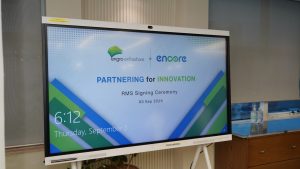
Another notable milestone in the Encore Solutions story is its reported technical partnership with Engro Corporation.
Engro operates across several major industrial sectors, including energy, fertilizers, petrochemicals and telecommunications. For a deep-tech company, working with a major industrial organization can provide an opportunity to apply technology in demanding real-world environments.
The collaboration highlights the potential application of Industrial IoT hardware and intelligent monitoring technologies within large-scale industrial operations. For organizations managing significant physical assets, connected technology can provide greater visibility into equipment and operations while supporting more informed maintenance and management decisions.
The partnership also reflects the broader movement toward industrial digitization, as major companies increasingly look for ways to connect physical infrastructure with digital intelligence.
Moving Toward Industry 4.0
The broader Industry 4.0 movement is changing how companies manage physical infrastructure. Traditional industrial environments often depend on manual inspections, periodic maintenance and reactive responses to equipment failures.
Connected technology introduces a different approach.
Machines can continuously generate data, sensors can monitor equipment, communication systems can transmit information and software can analyze what is happening. Companies can then use these insights to improve operational decisions.
This transformation creates opportunities for technology companies that understand both sides of the equation: the physical engineering behind industrial equipment and the digital systems needed to make that equipment smarter.
Encore Solutions operates at this intersection, bringing together technologies such as embedded systems, smart power management and Industrial IoT.
What Makes Shakaib Safvi’s Story Different?
The most interesting part of Shakaib Safvi’s journey is that he came to entrepreneurship through engineering rather than the other way around. While many startup stories begin with a business idea and then search for technical talent, Safvi spent years developing technical expertise before building his own company.
His background gave him practical knowledge of electrical engineering, electronics, hardware development, embedded systems and power technology. At the same time, his personal projects demonstrate that his interest in complex technology extends beyond his formal career.
That distinction matters in deep tech. Building industrial technology can require research, development, testing and specialized engineering knowledge. Unlike a simple software product, hardware often needs to operate reliably in demanding physical environments.
For that reason, an engineering-first approach can become a significant advantage.
Why Deep-Tech Startups Matter
Deep-tech companies often receive less attention than consumer technology startups because their products are more difficult to explain. A consumer application can quickly attract millions of users, while an industrial technology product may operate quietly behind the scenes.
Yet the impact can be substantial.
Power networks, factories, telecommunications infrastructure and other critical systems increasingly depend on connected technology. As these industries continue to digitize, the demand for specialized hardware, embedded systems, sensors, monitoring technologies and Industrial IoT platforms could continue to expand.
This creates an opportunity for engineering-driven companies that can solve problems at the intersection of physical infrastructure and digital intelligence.
The Bigger Opportunity for Encore Solutions
The industrial world is becoming increasingly connected. Factories are generating more data, power networks are becoming smarter and businesses are looking for ways to reduce downtime while gaining better visibility into their physical assets.
However, collecting data is only the beginning.
The real opportunity comes from turning that information into actionable intelligence. This is where the combination of hardware, embedded systems, power management and Industrial IoT becomes increasingly valuable.
For Encore Solutions, this convergence creates an opportunity to develop technology for industries where reliability, connectivity and intelligent monitoring matter.
For Shakaib Safvi, it also represents a continuation of the same engineering philosophy that has shaped his career: understand the problem, build the technology and find a practical way to make complex systems work.