

 Written by
 Gaurav Thapa AI Startup: How Fastlane Turns Viral Content Into Growth
The Gaurav Thapa AI startup story shows how artificial intelligence is creating a new path for young entrepreneurs. Instead of spending years building a traditional software company, Thapa and his co-founders are using AI to tackle one of the biggest challenges facing modern businesses: getting attention online. Thapa is a co-founder of Fastlane, an AI-powered marketing startup designed to help businesses create short-form content based on viral trends. The company focuses on an increasingly important problem. AI has made it easier to build products, but getting customers to discover those products can still be extremely difficult. That problem became the foundation for the Fastlane AI startup.
Who Is Gaurav Thapa?
Gaurav Thapa is a co-founder of Fastlane, an AI marketing startup built around short-form content and online distribution. His path into entrepreneurship was anything but traditional. Thapa says he dropped out of law school at age 21 after realizing that becoming a lawyer was not the career he wanted. Instead, he started building software products. While public profiles focus on his business activities in Sydney, Australia, Thapa’s educational background is also closely connected to the city. He was raised in Australia, completed his high school education there and later attended the University of Sydney.
Thapa’s journey eventually took him into the startup world, where he began experimenting with software products and different ways to attract customers. That experience exposed him to a frustrating problem: building a product was becoming easier with AI, but getting people to notice that product remained difficult. Thapa and his team began experimenting with short-form content to solve that problem for their own projects. According to information shared by the Fastlane team, their previous projects generated more than 50 million views. Those experiments helped the founders learn which types of content could attract attention online, and that experience eventually became the foundation for Fastlane.
What Does Fastlane Actually Do?
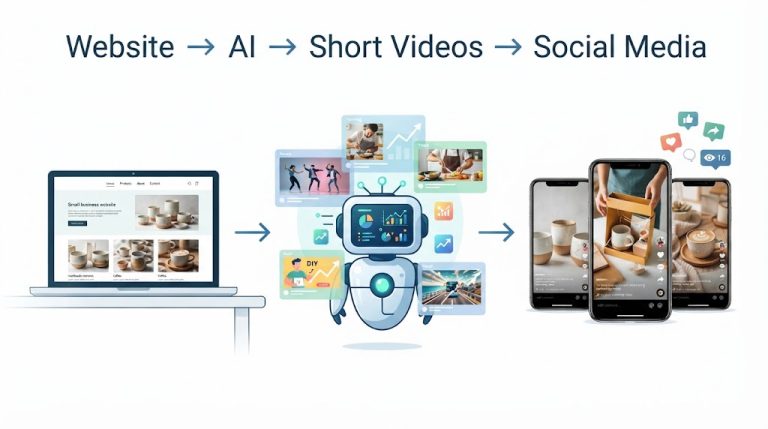
In simple terms, Fastlane is an AI marketing startup that helps businesses turn viral content patterns into promotional content for their own products. The process is designed to be simple. A business starts by entering its website or information about its product. Fastlane’s AI analyzes the business and generates short-form content ideas based on trends and formats that are already attracting attention. Instead of sitting in front of a blank screen wondering what to post, the user receives multiple content ideas to consider.
The basic process is: Enter your website → Fastlane analyzes your business → AI generates content ideas → review the ideas → select the best ones → publish them on social media. Fastlane has described the experience as a “Tinder for Marketing” because users can quickly move through different content ideas and decide which ones they want to use. The platform focuses on short-form content designed for social media platforms such as TikTok, Instagram Reels and YouTube Shorts. That makes the Fastlane AI startup different from a general-purpose chatbot. Instead of simply answering questions, the platform is designed around a specific business workflow: helping companies create content that can attract attention.
Why Viral Content Matters
Short-form content has transformed digital marketing. A small company can potentially reach a huge audience without buying traditional advertising, and one successful video can generate thousands or even millions of views. But creating that successful video is not easy. Businesses need ideas, hooks, scripts, visuals and formats that people will actually watch, and they also need to publish content consistently. That creates an opportunity for AI.
Fastlane attempts to reduce the amount of manual work involved in discovering ideas and producing promotional content. For marketers, the appeal is simple: less time brainstorming and more time creating and testing content. This is one reason the AI marketing startup category is attracting so much attention.

The Founders Learned Distribution First
One of the most interesting parts of the Gaurav Thapa story is that Fastlane was not created simply because the founders believed AI was the next big technology trend. They had a problem of their own. They were building products and needed to find customers. Instead of treating marketing as something separate from the product, they began studying viral content and experimenting with different formats.
Their reported 50 million-plus views gave them practical experience with online distribution, and that experience helped shape Fastlane. The founders realized that many businesses had the same problem they had encountered themselves: building a product can be relatively easy, but getting people to notice it can be much harder. Fastlane was created to address that gap.
Fastlane’s Early Launch
The startup’s own launch became an early test of its approach. Fastlane launched on Product Hunt in March 2026 and finished as the #3 Product of the Day, according to launch records. Thapa also reported that the launch generated more than 250,000 views on X and that more than 3,000 businesses were using or had signed up for the platform at that stage.
The company was operating with a remarkably small team. That is significant because the Gaurav Thapa AI startup story is not built around a massive organization. It demonstrates how a small group can use AI, social media and rapid experimentation to build attention around a new product. In effect, Fastlane became its own marketing experiment.
AI Is Changing How Startups Are Built
The Fastlane story reflects a much larger shift happening across technology. Traditional software startups often required developers, designers, marketers, sales teams and significant capital before they could launch. AI is changing that model. Today’s entrepreneurs can use AI for coding, research, content creation, customer analysis and automation. That does not make entrepreneurship easy, but it can reduce the time and resources required to test an idea.
This is creating a new generation of AI entrepreneurs. Some founders are building companies around AI models, while others are using AI as an operating system for their businesses. The Gaurav Thapa AI startup falls into the second category. Fastlane uses AI to solve a specific marketing problem rather than simply selling access to another general-purpose AI system.

Thousands of Customer Conversations
Customer feedback also played an important role in Fastlane’s development. Thapa and co-founder Joe reportedly conducted around 2,000 customer calls while refining the product. Those conversations helped the team narrow its focus. The founders initially explored a broader AI marketing concept, but feedback from potential customers pushed them toward short-form content and distribution.
That approach offers an important lesson for anyone following an AI startup success story. AI can help entrepreneurs build products quickly, but customers still determine whether those products solve meaningful problems. Fastlane’s founders did not simply assume they knew what the market wanted. They talked to potential users and adjusted the product based on what they learned.
The Bigger AI Startup Opportunity
Fastlane points toward a much larger opportunity in artificial intelligence. AI is moving beyond chatbots and becoming part of complete business workflows. Marketing is an obvious example. A future AI marketing platform could identify a trend, create content, publish it, measure the results and then use that performance data to determine what should be created next.
That would turn AI from a simple content-generation tool into an automated growth system. Fastlane is moving toward that broader vision. The goal is not simply to help a business make one video. The larger opportunity is creating a repeatable system that helps businesses continuously discover, create and test content.
The Challenge Ahead
The AI marketing industry is becoming increasingly competitive. Large technology companies and startups are developing tools that can generate videos, images, advertisements and social media posts. Fastlane therefore needs to offer more than AI-generated content.
Businesses ultimately want results. They want more attention, leads, customers and sales. That means Fastlane’s biggest advantage could come from its understanding of viral content and its ability to connect that knowledge with a business’s specific product. The founders’ experience generating millions of views could become an important part of that advantage.
Why Gaurav Thapa’s Story Stands Out
There are thousands of AI startups competing for attention, but the Gaurav Thapa AI startup story has a distinctive angle. Thapa dropped out of law school at 21, began experimenting with software, learned about online distribution and eventually turned those lessons into an AI marketing startup.
The journey demonstrates an important reality of the current AI boom: Building software is becoming easier. Getting attention is not. Fastlane is attempting to solve that second problem. The founders experienced the distribution challenge themselves, studied viral content and then built a platform designed to help other businesses overcome the same obstacle.
A New Startup Playbook
The Fastlane story could ultimately become less about one company and more about a new way of building startups. An entrepreneur can identify a specific problem, use AI to build a solution, launch it online, collect customer feedback and rapidly improve the product. That process can happen much faster than it did in the traditional software era.
It does not guarantee success. Competition remains intense, customers still demand value and most startup ideas will never become major businesses. But AI gives founders something extremely valuable: speed. For Gaurav Thapa and his co-founders, that speed has become part of the Fastlane story.
They started by trying to solve their own distribution problem. They experimented with viral content, generated millions of views, talked to thousands of potential customers and eventually turned those lessons into an AI-powered marketing platform. Now Fastlane is betting that businesses everywhere face the same challenge. They can build their products, launch their websites and use AI to develop new software, but they still need people to notice.
That is the opportunity behind the Gaurav Thapa AI startup — and it could be an early example of how AI is changing not only how companies are built, but how those companies find their customers.